Supplier Evaluation
Supplier evaluation is a systematic procedure for assessing and monitoring the performance of suppliers on the basis of defined criteria. Its objective is to ensure a stable, quality-compliant, and standard-compliant supply to the organization’s own value creation. Within quality management, supplier evaluation is a central instrument for controlling external processes and partners.
Systemic Classification Within Quality Management
According to ISO 9001, organizations must ensure that externally provided processes, products, and services meet specified requirements. Supplier evaluation serves the structured monitoring of this requirement and is therefore part of quality assurance along the entire supply chain.
It links operational performance indicators with strategic supplier management and has both a preventive and a corrective effect.
Evaluation Criteria
The evaluation is typically based on standardized criteria, for example:
- product and process quality (defect rates, complaints)
- on-time delivery
- quantity and delivery reliability
- response time in the event of deviations
- audit and certification status
- communication and escalation capability
The criteria are weighted and combined in an evaluation system. This results in a comparable performance indicator.
Operational, Tactical, and Strategic Effect
- Operational: early detection of quality risks, control of incoming inspections, derivation of actions.
- Tactical: supplier development, escalation levels, agreements on quality improvement.
- Strategic: selection, classification, and long-term partnership decisions.
In combination with statistical process control, quality indicators can be analyzed on a data basis and trends identified at an early stage.
Distinction from Related Terms
Supplier evaluation must be distinguished from the following instruments:
- Supplier audit: a one-off on-site examination of management and process systems.
- Incoming inspection: inspection of individual delivery lots for conformity.
- Supplier development: targeted improvement of a partner’s performance.
While audits and inspections represent individual events, supplier evaluation represents a continuous evaluation process.
Digitalization and System Integration
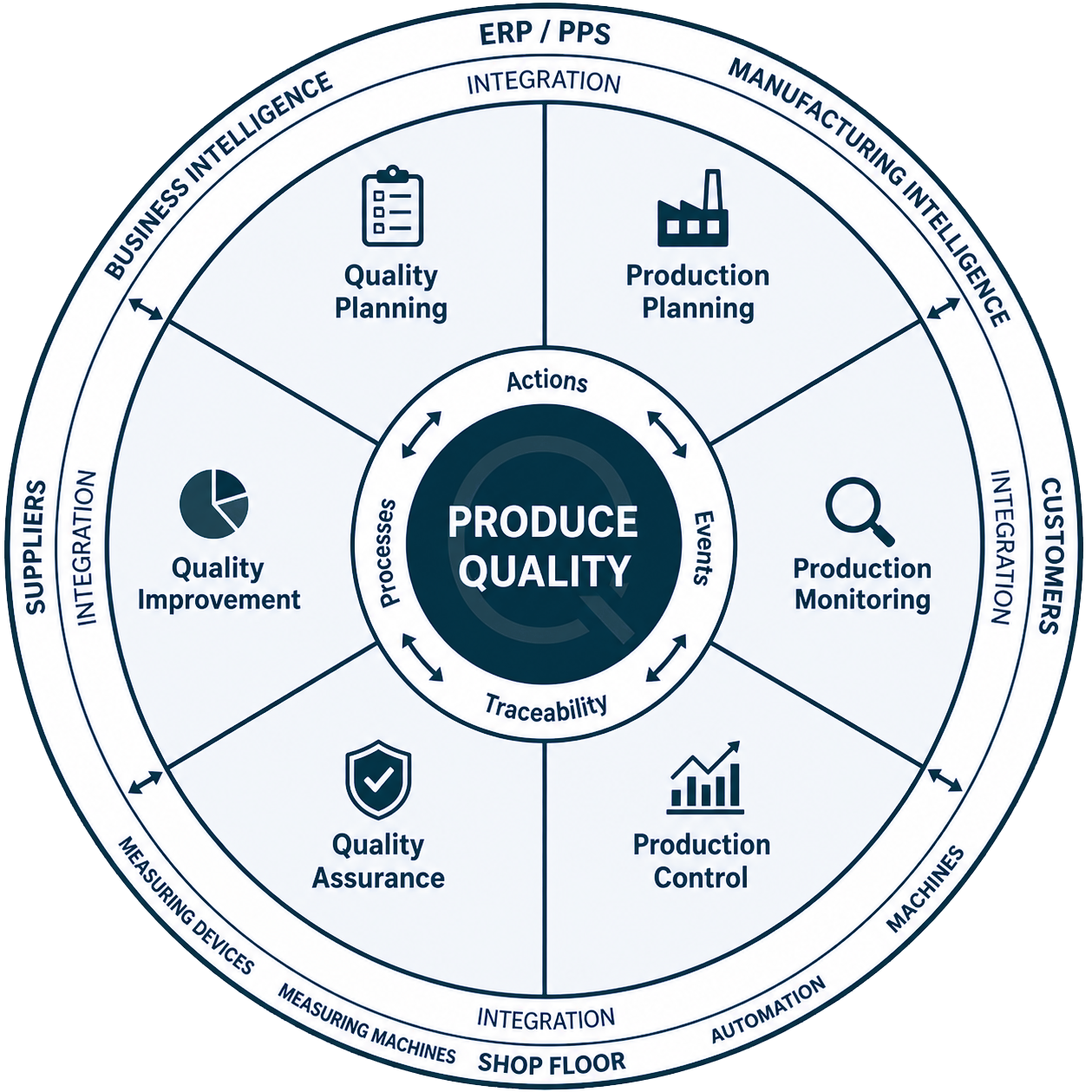
In digitalized quality environments, supplier evaluation is frequently integrated into CAQ or ERP systems. Complaint data, inspection results, and indicators flow automatically into evaluation matrices. This creates a transparent, traceable, and auditable basis for decisions.
FAQ – Frequently Asked Questions About Supplier Evaluation
What is the objective of supplier evaluation?
The objective is the systematic assurance of supplier performance with regard to quality, on-time delivery, and process stability.
How often is a supplier evaluation carried out?
The frequency depends on risk, delivery volume, and industry requirements. In practice, it is carried out regularly, for example quarterly or annually.
Is supplier evaluation required by standards?
Yes. ISO 9001 requires the monitoring and re-evaluation of external providers on the basis of defined criteria.
What is the difference between an audit and an evaluation?
An audit is a one-off on-site examination, while supplier evaluation is a continuous, indicator-based performance assessment.
Standards and Norms
ISO 9001 requires the monitoring and re-evaluation of external providers on the basis of their ability to meet requirements. Industry-specific regulations, for example in the automotive sector with IATF 16949, define further requirements for supplier management and supplier development. Supplier evaluation is not an end in itself, but part of an effective quality management system. Further information: Supplier evaluation (Wikipedia).
Further Internal Content
- Complaint management
- Incoming goods and incoming inspection
- Quality indicators in the context of a CAQ system
AI-assisted · Editing and publication: Christian Sedlag · Last updated: 28 October 2026
CAQ that produces quality
From inspection planning to operator guidance – modular, integrable, and SAP-compatible
- Significantly reduced inspection effort through CTQ and adaptive inspection strategies
- Zero-defect approach through inline inspection and machine integration
- End-to-end SAP integration and shopfloor connectivity
More than 45 years in manufacturing