Inspection Planning: Defining Inspection Characteristics, Methods and Scope
Inspection planning is the systematic definition of all quality-related inspection activities along the product development and production process. It determines which characteristics are inspected, with which inspection methods, at what point, to what extent and with which inspection equipment. The aim is to ensure, in a structured way, that products and processes conform to the specified requirements within quality management and quality assurance.
Within a quality management system based on ISO 9001, inspection planning turns the requirements for monitoring and measuring processes and products into concrete activities. It provides the operational basis for effective process control and is closely linked to the methods of statistical process control (SPC).
How Is Inspection Planning Embedded in the Quality Management System?
Inspection planning is a tactical instrument within quality planning. It translates customer requirements, normative requirements and internal specifications into concrete inspection and monitoring activities. At the strategic level, it derives inspectable quality characteristics from quality objectives and customer requirements. At the tactical level, it defines inspection strategies, inspection methods and inspection intensity for the relevant process steps. At the operational level, it results in documented inspections at incoming goods, in production and at outgoing goods. Inspection planning thus links advanced quality planning, process design and series monitoring.
How Does Inspection Planning Differ from the Inspection Plan?
The inspection plan is the documented result of inspection planning. Inspection planning describes the methodological and organizational planning process, whereas the inspection plan is the structured compilation of the defined inspection characteristics, inspection equipment, inspection scope and inspection frequencies. In practice, several types of inspection plan are often distinguished, such as the incoming inspection plan, the in-process inspection plan and the final inspection plan, each covering a different phase of the product development process.
How Does Inspection Planning Differ from the Control Plan?
The control plan extends classic inspection planning with process-related control parameters, mechanisms for responding to deviations, and responsibilities. In the automotive industry, the control plan is the established, more comprehensive document that links inspection planning with process control; the AIAG reference manual “Control Plan” describes its structure, its phases and its link to upstream advanced product quality planning (APQP). Inspection planning in the narrower sense, by contrast, remains focused on inspection characteristics, inspection methods and inspection scope, without necessarily covering reaction plans or process parameters to the same extent.
What Role Do Special Characteristics Play in Inspection Planning?
Special characteristics are product characteristics or process parameters that can affect safety, regulatory compliance, fit, function, performance or further processing of a product. IATF 16949, section 8.3.3.3, requires special characteristics to be identified using a multidisciplinary approach, including those specified by the customer and those derived from the organization’s risk analysis, and to be marked consistently in drawings, risk analyses such as the process FMEA, inspection plans and control plans, and work instructions. For inspection planning, this means that characteristics classified as special usually receive a higher inspection intensity, closer documentation or a specific inspection method, while characteristics without a special classification can be handled with less inspection depth.
What Does Structured Inspection Planning Include?
Structured inspection planning includes identifying the product and process characteristics relevant for inspection, defining inspection criteria and specification limits, and specifying suitable inspection and measurement methods. It also covers determining sample sizes and inspection intervals, assigning suitable inspection equipment and defining documentation requirements, including traceability. Inspection planning takes both attribute and variable inspection methods into account; which method is appropriate depends on the characteristic and the underlying requirement.
How Does a Risk-Based Approach Affect Inspection Planning?
Inspection intensity is determined by the severity of failure effects, the probability of occurrence and the probability of detection, as these often result from an upstream FMEA. Inspection planning is therefore not a static state defined once; it is linked to risk and performance indicators and adjusted when required, for example when the demonstrated process capability or the defect history of a characteristic changes. In regulated industries, industry-specific requirements define this risk-based approach in more detail, in particular IATF 16949 in the automotive industry.
How Is Inspection Planning Integrated into Digital CAQ Environments?
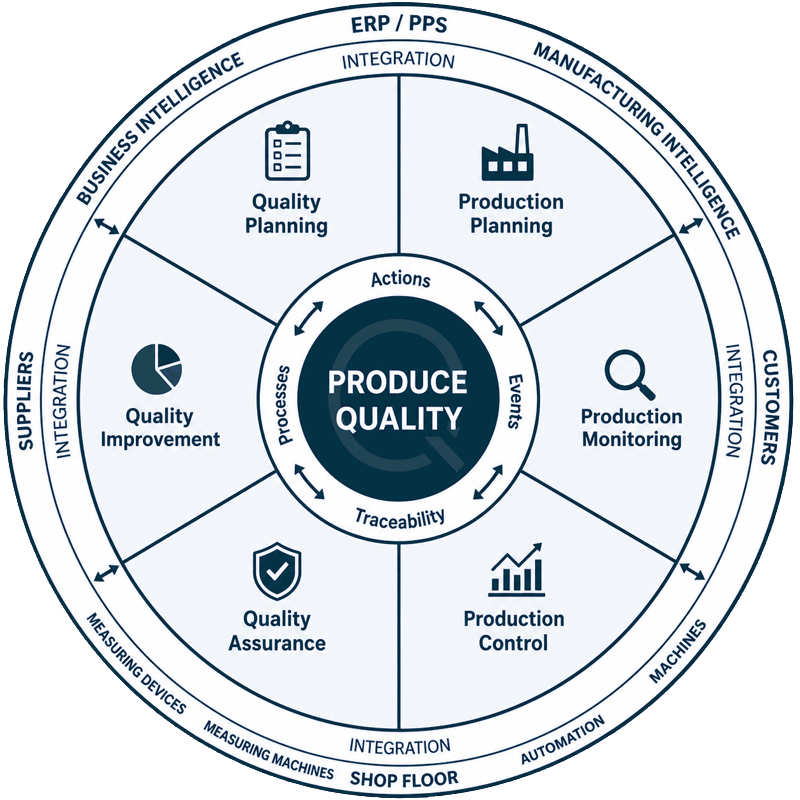
In digitalized production environments, inspection planning is often part of an integrated CAQ architecture. Inspection plans, inspection characteristics and inspection data are managed in the system, which makes it easier to keep planning, data capture and evaluation consistent than with paper-based or isolated documentation. There are close links in particular to the management and monitoring of the inspection equipment in use, to measurement data acquisition and statistical evaluation, and to traceability and document control systems.
Which Normative Requirements Apply to Inspection Planning?
ISO 9001, in its clauses on monitoring and measuring resources and processes, requires organizations to determine suitable methods for monitoring, measurement, analysis and evaluation, without prescribing a specific planning method. Inspection planning is an established way to meet this requirement in a structured manner, but it is not standardized in its own right.
In the automotive industry, IATF 16949 specifies this requirement in much more detail: section 8.3.3.3 requires the systematic identification and consistent marking of special characteristics, and section 8.5.1.1 requires a control plan to be developed and maintained for each product or product family. The AIAG reference manual “Control Plan” is a technical publication on the methodology; it describes how inspection characteristics are derived from upstream APQP and FMEA work.
FAQ on Inspection Planning
What is the difference between inspection planning and the inspection plan?
Inspection planning describes the organizational and methodological planning process. The inspection plan is the documented result of this planning: a structured overview of all defined inspection activities.
What role does inspection planning play in the quality management system?
Inspection planning puts the ISO 9001 requirements for monitoring and measurement into practice and provides the basis for effective process and product control.
What are special characteristics, and why do they matter for inspection planning?
Special characteristics are product or process characteristics that affect safety, regulatory compliance, fit, function or further processing. IATF 16949 requires them to be identified and documented consistently; in inspection planning, they usually lead to a higher inspection intensity.
How does the control plan differ from classic inspection planning?
The control plan extends inspection planning with process parameters, mechanisms for responding to deviations, and responsibilities, and links it to process control. Classic inspection planning focuses on inspection characteristics, methods and scope.
How does process capability affect inspection planning?
The demonstrated process capability influences the scope and frequency of inspections. Processes that are in control can justify a reduced inspection intensity, while unstable processes require closer monitoring.
Is inspection planning only relevant in series production?
No. Inspection planning starts in the product development phase and covers the entire product life cycle, including incoming goods, production and outgoing goods.
Standards and Norms
ISO 9001 provides the general framework for monitoring and measurement without prescribing a specific planning method. In the automotive industry, IATF 16949 specifies this requirement in section 8.3.3.3 (special characteristics) and section 8.5.1.1 (control plan). The AIAG reference manual “Control Plan” supports the methodological design of the control plan, including how inspection characteristics are derived from APQP and FMEA work.
Further Internal Content
- Control plan as an extended process control approach
- Process capability as a factor in inspection intensity
- Inspection equipment management for the inspection equipment in use
AI-assisted · Editing and publication: Christian Sedlag · Last updated: 9 November 2026
CAQ that produces quality
From inspection planning to operator guidance – modular, integrable, and SAP-compatible
- Significantly reduced inspection effort through CTQ and adaptive inspection strategies
- Zero-defect approach through inline inspection and machine integration
- End-to-end SAP integration and shopfloor connectivity
More than 45 years in manufacturing